
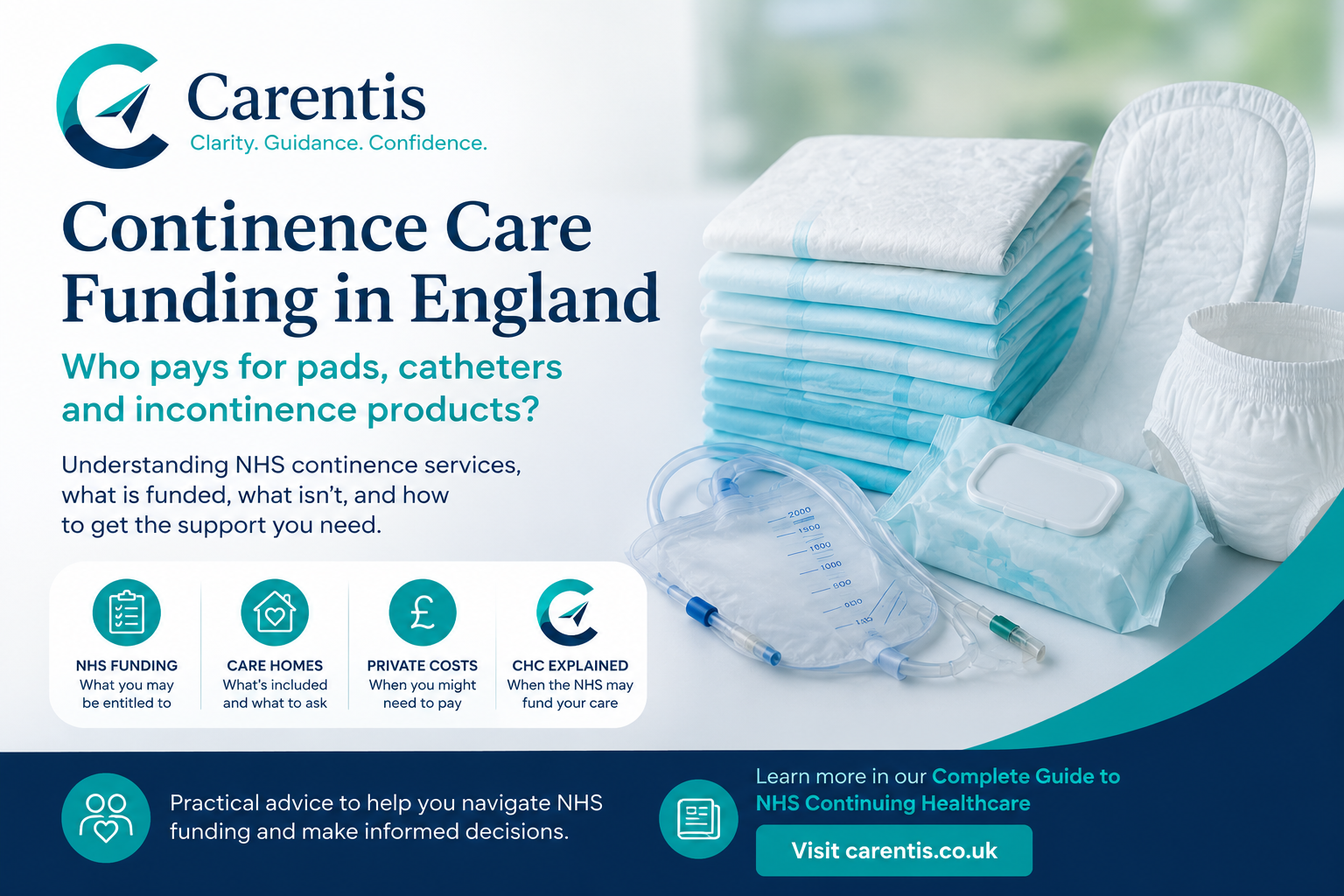
When a loved one develops continence problems, families are often faced with a confusing mix of NHS services, local authority support and private costs. Many people assume they will need to pay for everything themselves, while others expect the NHS to provide unlimited supplies.
The reality is somewhere in between.
Depending on a person’s needs and where they live, the NHS may fund assessments, continence products, catheter equipment and specialist support. However, eligibility and the type of products provided can vary between different parts of England.
This guide explains what help is available, who is responsible for funding continence care, and what you can do if your relative’s needs become more complex.
What is continence care?
Continence care involves supporting people who have difficulty controlling their bladder or bowels. This may include:
- Urinary incontinence
- Faecal incontinence
- Mixed incontinence
- Catheter care
- Stoma care
- Skin protection and pressure prevention
- Managing continence with dementia or neurological conditions
Although continence problems become more common with age, they should never simply be accepted as an inevitable part of getting older. Many conditions can be improved or managed with the right assessment and treatment.
The NHS Bladder and Bowel Service
Most areas in England have a specialist NHS Bladder and Bowel Service (sometimes called a Continence Service).
Your GP, district nurse, community nurse or hospital team can usually make a referral.
Following an assessment, the service may offer:
- A full continence assessment
- Advice on improving bladder and bowel health
- Pelvic floor exercises
- Medication reviews
- Catheter assessments and ongoing management
- Product assessments
- Education for carers and family members
- Regular reviews if needs change
The aim is always to improve independence wherever possible rather than simply supplying products.
Does the NHS provide free continence products?
In many cases, yes.
If someone meets the eligibility criteria following a continence assessment, the NHS may provide products such as:
- Disposable continence pads
- Pull-up pants
- Bed protection products
- Catheters
- Drainage bags
- Male sheaths
- Leg bags
- Some skin protection products
However, there is an important point that many families do not realise.
Provision varies across England
Continence services are commissioned locally by NHS Integrated Care Boards (ICBs).
This means different areas may have different:
- Eligibility criteria
- Types of products available
- Monthly quantities supplied
- Assessment processes
Two people with very similar needs living in different counties may receive different levels of NHS support.
When might you have to pay privately?
Some families choose—or need—to purchase products themselves.
This can happen if:
- A person does not meet NHS eligibility criteria
- They need more products than the NHS provides
- They prefer a different brand
- They require additional protection during holidays or travel
- They want products that are more discreet or comfortable
Depending on the level of need, private costs can range from around £50 per month to well over £200 each month.
Over several years, these costs can become significant.
What happens if someone lives in a care home?
This is one of the most common questions families ask.
In most residential and nursing homes, routine continence products are included within the home’s fees.
Many homes also work alongside NHS continence services where appropriate, particularly for:
- Catheter equipment
- Specialist assessments
- Complex continence needs
However, arrangements vary between providers and local NHS services.
Before choosing a care home, always ask:
- Are continence products included in the fees?
- Are there any additional charges?
- How are specialist products obtained?
- How often are residents reviewed?
Understanding this before admission can prevent unexpected costs later.
Could NHS Continuing Healthcare pay for care?
Continence needs alone do not automatically qualify someone for NHS Continuing Healthcare (CHC).
However, continence is one of the twelve care domains considered during a Continuing Healthcare assessment.
Complex needs such as:
- Double incontinence
- Difficult catheter management
- Frequent urinary tract infections
- Skin breakdown caused by incontinence
- Unpredictable continence needs
- High levels of nursing intervention
may contribute to an overall assessment of a person’s health needs.
It is important to remember that CHC looks at the totality of someone’s health needs, not just one condition or symptom.
Practical steps for families
If you are supporting someone with continence problems:
- Ask the GP for a referral to the NHS Bladder and Bowel Service.
- Request a full continence assessment.
- Keep a bladder or bowel diary if advised.
- Review medications regularly.
- Monitor skin condition carefully.
- Ask what NHS-funded products are available in your area.
- If care needs are becoming increasingly complex, ask whether an NHS Continuing Healthcare Checklist should be completed.
Early assessment can often improve quality of life while reducing unnecessary costs.
You’re not alone
Navigating health and social care funding can feel overwhelming, especially when you’re also caring for someone you love.
Understanding what the NHS should provide—and what you may need to fund yourself—can save hundreds or even thousands of pounds over time.
Need help understanding NHS Continuing Healthcare?
If your loved one’s health needs are becoming more complex, they may be entitled to NHS Continuing Healthcare funding.
Our Complete Guide to NHS Continuing Healthcare explains:
- How the CHC process works
- What assessors are looking for
- The 12 Care Domains explained in plain English
- Common reasons applications fail
- Practical tips to improve your understanding before an assessment
Whether you’re preparing for your first Checklist or a full Decision Support Tool assessment, the guide is designed to help families approach the process with confidence.
Complete Guide to NHS Continuing HealthCare (CHC)
Prepare for your NHS Continuing Healthcare (CHC) assessment with confidence. This comprehensive guide explains the Checklist, Decision Support Tool (DST), Primary Health Need test, and appeals process in plain English, helping families understand what assessors are looking for and how to present the strongest possible evidence.
Looking for more free advice?
Visit the Carentis Resource Centre for practical guides covering:
- Care home fees
- Lasting Powers of Attorney
- Choosing a care home
- NHS funding
- Social care assessments
- Support for family carers
Our mission is simple: to help families make informed decisions with clear, honest guidance when they need it most.
Care Home Concerns Guidance Call
If you’re worried about the care your loved one is receiving in a care home, this confidential guidance call provides practical, independent advice from an experienced nurse, care home manager and senior care leader. Together, we’ll discuss your concerns, explore your options, and create a clear action plan so you know what to do next