
Caring for someone with dementia can be incredibly rewarding, but it can also be physically and emotionally exhausting. Many family carers reach a point where they need a short break to recharge, attend to their own health, or spend time with other family members.

For many, that means considering respite care.
Yet the thought of a loved one staying in a care home, even for a short period, can be filled with guilt, anxiety and uncertainty.
“Will they think I’ve abandoned them?”
“Will they settle?”
“Should I tell them in advance?”
“What if they refuse to go?”
These are all common concerns.
The good news is that, with careful planning and the right approach, respite care can be a positive experience for both the person living with dementia and the people who care for them.
Start planning before you need the break
One of the biggest mistakes families make is waiting until they are completely exhausted before arranging respite care.
When respite is organised during a crisis, everyone is under pressure.
Instead, try to introduce the idea while things are relatively stable.
This gives you time to find the right care home, complete assessments and help your loved one become familiar with the environment before they stay overnight.
Choose the right care home
Not every care home is the right fit for someone living with dementia.
When visiting homes, look beyond the décor and ask yourself:
- Do staff know the residents by name?
- Are people engaged in activities or sitting alone?
- Does the atmosphere feel calm?
- Are residents treated with dignity and respect?
- Does the home have experience supporting people with dementia?
- Can they meet your loved one’s specific needs?
Ask how the home supports people who become anxious, confused or distressed in unfamiliar surroundings.
A good dementia care home should want to learn about the person, not just their diagnosis.
For more guidance, read our article on How to Choose a Care Home for Respite.
Make the first visit relaxed
The first visit should not feel like an assessment.
Instead, treat it as an opportunity to explore.
Have a coffee.
Walk around the gardens.
Sit in one of the lounges.
Watch what is happening around you.
Allow your loved one to experience the atmosphere without any pressure.
If they enjoy chatting with people, encourage conversation with residents or staff.
If they prefer quieter environments, spend time in a peaceful area of the home.
The aim is to create familiarity rather than making it feel like a major life event.
Visit more than once
Very few people feel comfortable in a completely unfamiliar environment after a single visit.
If possible, arrange several visits.
Each visit helps build recognition.
Over time, the building, the staff and even other residents can begin to feel familiar.
This can significantly reduce anxiety when the respite stay begins.
Share lunch together
Many care homes are happy for prospective respite residents to join everyone for lunch.
This is one of the best ways to experience everyday life in the home.
It gives your loved one an opportunity to:
- Meet other residents
- Experience the dining room
- Sample the food
- Observe the daily routine
- Become familiar with staff
For families, it also provides valuable insight into how meals are supported and how staff interact with residents.
Join in an activity
If possible, stay for one of the organised activities.
Whether it’s singing, quizzes, gardening, arts and crafts or gentle exercise, taking part together can help your loved one associate the care home with something enjoyable rather than something to fear.
Many families are surprised by how much their relative enjoys activities they would never choose to do at home.
Tell the care home about the person, not just the dementia
A diagnosis only tells staff a very small part of someone’s story.
Spend time completing the pre-admission information thoroughly.
Tell the home about:
- Their previous occupation
- Family members
- Favourite music
- Hobbies
- Food preferences
- Daily routines
- Favourite television programmes
- What makes them laugh
- What causes anxiety
- How they like their tea
- Whether they prefer a shower or bath
- How they communicate discomfort
These seemingly small details often make the biggest difference to how settled someone feels.
Bring familiar belongings
Even a short respite stay feels more comfortable when familiar items come too.
Consider packing:
- Favourite photographs
- A familiar blanket
- Their own pillow
- Favourite toiletries
- A favourite cardigan
- Books or magazines
- A radio
- Music playlists
- Small ornaments that have sentimental value
These familiar objects provide reassurance in an unfamiliar environment.
The first overnight stay
When the day arrives, keep things as calm as possible.
Avoid creating unnecessary drama or repeatedly telling your loved one how worried you are.
Your emotions can easily become their emotions.
Staff are experienced at helping new residents settle, so allow them time to establish rapport before staying too long yourself.
Should you visit during respite?
This is one of the questions families ask most often.
Unfortunately, there is no single answer.
For some people, regular visits provide reassurance and help them settle.
For others, every visit restarts the process of saying goodbye and can increase confusion or distress.
Much depends on:
- The stage of dementia
- The person’s personality
- How they are settling
- The length of the respite stay
- Advice from the care team
It is perfectly reasonable to discuss this with the home’s staff after the first day or two.
They will often have a good sense of whether visits are helping or making things more difficult.
We explore this in much more detail in our article:
Should You Visit Someone with Dementia When They First Move into a Care Home?
What if they say they want to come home?
This can be heartbreaking.
It is natural to want to immediately end the stay.
However, remember that many people ask to go home during the first few days in any new environment.
Try not to make decisions based on one difficult conversation.
Speak to the care team.
Ask:
- Are they joining activities?
- Are they eating well?
- Are they sleeping?
- How are they interacting with staff?
- Are there particular times they become unsettled?
Often the picture is far more positive than the brief phone call suggests.
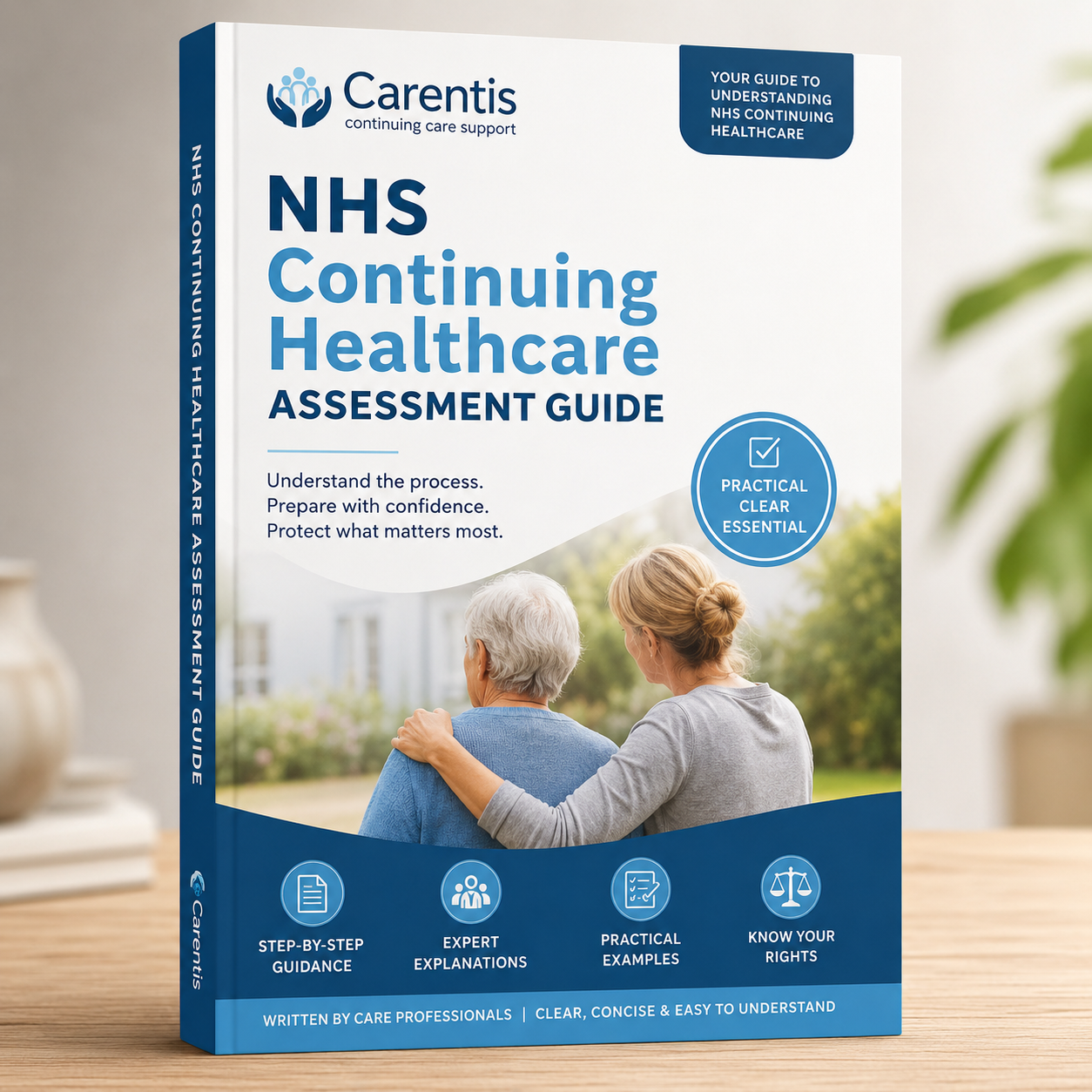
Can NHS Continuing Healthcare (CHC) help pay?
Some families discover during the respite process that their loved one’s needs have become far greater than they realised.
If the person has complex, intense or unpredictable health needs, it may be appropriate to ask whether they should be considered for NHS Continuing Healthcare (CHC).
CHC is not awarded because someone has dementia.
It is awarded where a person has a primary health need, following a formal assessment.
If your relative already requires significant nursing care, frequent interventions or has increasingly complex needs, it is worth asking whether a CHC assessment is appropriate.
Read our guide:
Respite Care and NHS Continuing Healthcare: Could the NHS Fund the Care?
What if you’re unhappy with the care?
Most respite stays go well.
However, if you have concerns, raise them early.
Start by speaking to the nurse in charge or the home’s manager.
Many issues can be resolved quickly through open communication.
If your concerns remain, ask for the home’s complaints procedure.
Keep a record of:
- Dates
- Times
- People spoken to
- What happened
- Any actions agreed
If your concerns relate to dignity, safety, medication, nutrition or poor communication, do not ignore them.
If you would like independent advice about concerns in a care home, or you’re unsure how to challenge poor care, Carentis offers confidential Care Home Advice Calls to help families understand their options and plan the next steps.
Remember why you’re doing this
Many carers feel guilty about taking a break.
But respite care is not about giving up.
It is about making caring sustainable.
Looking after someone with dementia is a marathon, not a sprint.
Taking time to rest allows you to return with more energy, patience and resilience.
That benefits both you and the person you care for.
Frequently Asked Questions
Is respite care a good idea for someone with dementia?
For many people, yes. When carefully planned and introduced gradually, respite care can provide valuable support for both the person living with dementia and their family carer.
Should I tell someone with dementia they’re going into respite care?
Every person is different. Some people benefit from being involved in planning, while others may become increasingly anxious if they are told too far in advance. Consider how your loved one usually responds to new information and discuss the best approach with the care home.
How can I help someone settle into respite care?
Gradually introducing the care home through visits, sharing meals, joining activities and providing detailed information about routines and preferences can make the transition much easier.
Can respite care become permanent?
Sometimes a respite stay helps families realise that permanent care may eventually be needed. However, permanent care should always be treated as a separate decision rather than an automatic extension of respite.
Can dementia care be funded by NHS Continuing Healthcare?
Possibly. Dementia alone does not qualify someone for NHS Continuing Healthcare, but people with complex health needs may be eligible following a formal assessment.
Related Articles
- Respite Care in the UK: A Complete Guide for Family Carers
- How to Choose a Care Home for Respite
- Should You Visit Someone with Dementia When They First Move into a Care Home?
- Respite Care and NHS Continuing Healthcare
- Can the Council Pay for Respite Care?
- Care Home Advice Calls – Independent Guidance for Families