
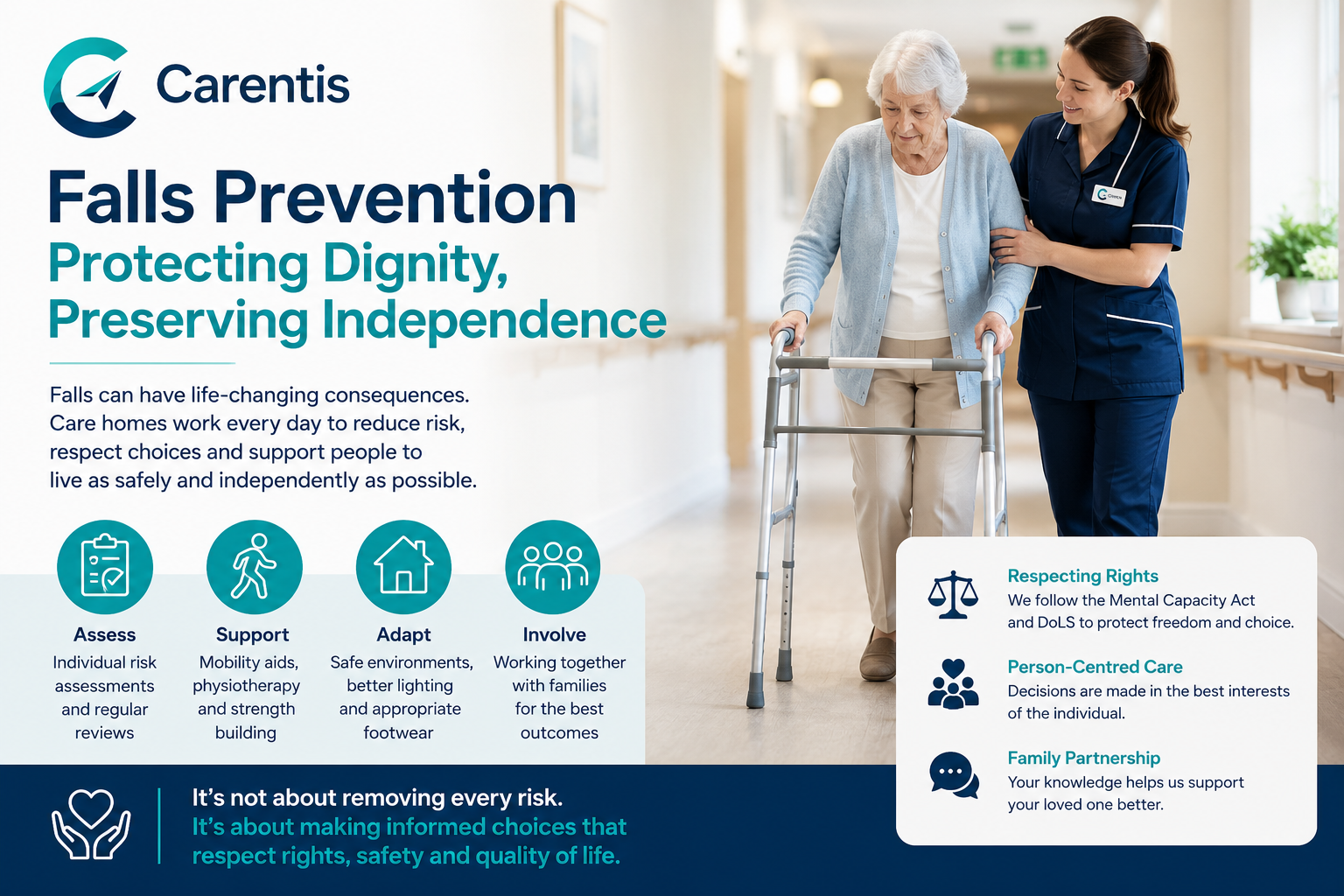
A fall can change a person’s life in seconds.
For an older person living in a care home, a fall isn’t just about a bruise or a broken bone. It can mean a loss of confidence, a hospital admission, increased dependency, or even a permanent decline in health. That’s why reducing falls is one of the biggest priorities for every good care home.
However, preventing falls is rarely as simple as “stopping someone from walking.” In fact, doing that could make things even worse.
Why are falls so dangerous?
As we get older, our bodies become less able to recover from injury.
A seemingly minor fall can lead to:
- Hip fractures
- Head injuries
- Internal bleeding
- Reduced mobility
- Increased confusion
- Fear of walking again
- Pressure ulcers caused by prolonged bed rest
- Pneumonia following hospital admission
Sadly, for some frail older people, a serious fall can be the beginning of a rapid decline in their overall health.
Why do people living with dementia fall more often?
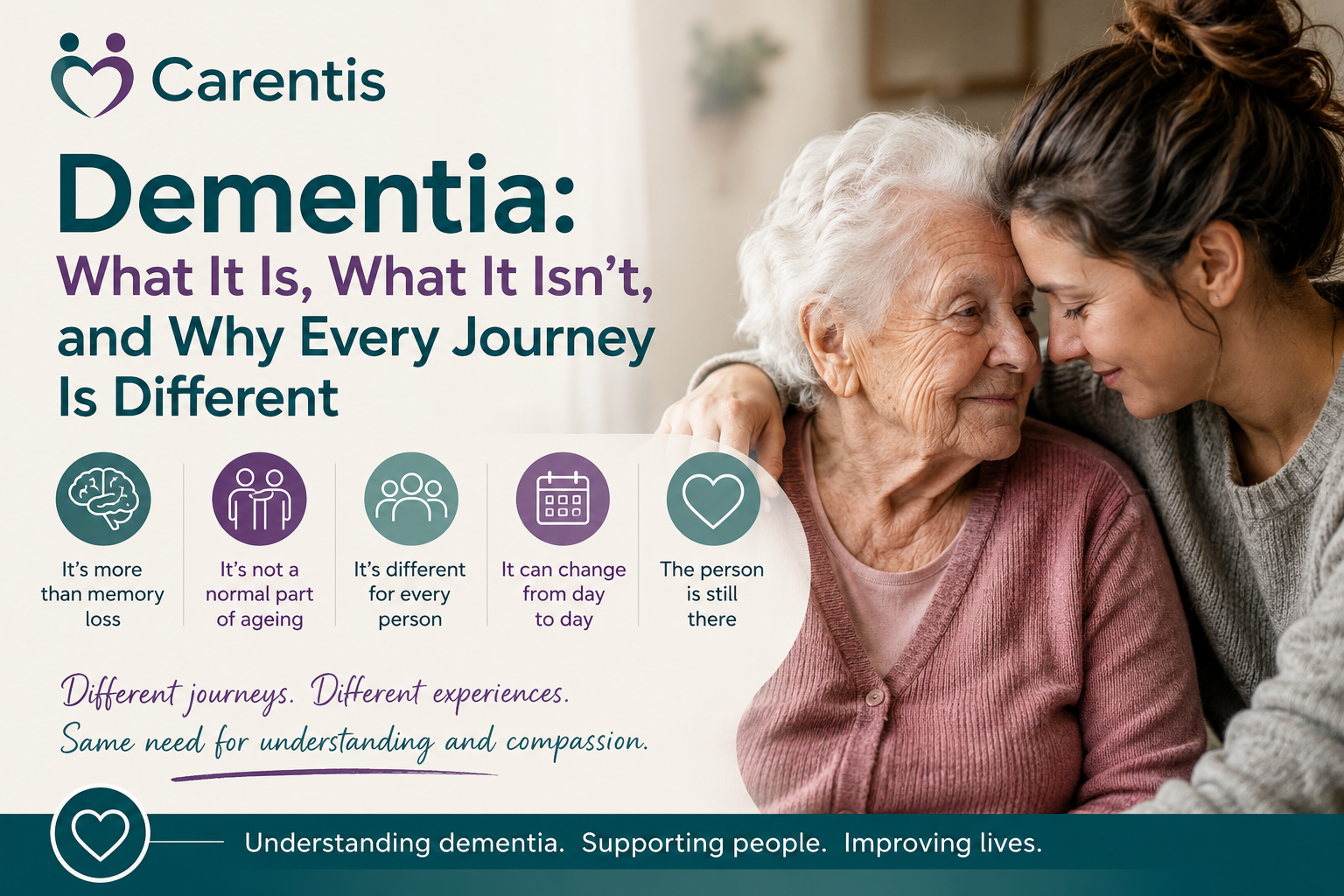
People living with dementia are at significantly higher risk because they may:
- Forget they need a walking aid
- Stand up without asking for assistance
- Misjudge distances or obstacles
- Become disorientated
- Pace or wander frequently
- Experience changes in vision and perception
- Take medications that affect balance
They aren’t being difficult—they’re living with a condition that changes how they understand the world around them.
Can care homes stop every fall?
No.
And any care home that suggests they can should be treated with caution.
The goal isn’t to eliminate every fall. It’s to reduce unnecessary risk while still allowing people to live meaningful, independent lives.
Someone who enjoys walking around the garden every day has the right to continue doing so, even if there is some level of risk.
Removing all risk often means removing quality of life.
How do care homes reduce falls?
Every resident should receive an individual falls risk assessment.
This isn’t a one-off document. It should be reviewed regularly and whenever circumstances change.
Measures may include:
- Appropriate walking aids
- Physiotherapy
- Strength and balance exercises
- Medication reviews
- Better lighting
- Correct footwear
- Safe flooring
- Managing pain
- Treating infections promptly
- Ensuring glasses and hearing aids are used
- Sensor mats or monitoring technology where appropriate
- Regular observation for residents whose risks increase
Importantly, good care homes also investigate every fall to identify patterns and learn from what happened.
Why don’t care homes simply stop residents from getting up?
This is one of the questions families ask most often.
The answer lies in the law.
Adults are presumed to have capacity unless assessed otherwise. If someone has capacity, they are free to make decisions—even decisions others consider unwise.
If someone lacks capacity because of conditions such as dementia, any decision made on their behalf must be in their best interests under the Mental Capacity Act 2005.
Simply preventing someone from standing up, locking doors, using bed rails, or constantly supervising them may amount to a deprivation of their liberty.
What is a Deprivation of Liberty Safeguards (DoLS)?
A DoLS authorisation exists to protect people who lack capacity.
It allows care homes or hospitals to restrict someone’s freedom only when:
- The person lacks capacity to consent.
- The restrictions are necessary to prevent harm.
- There is no less restrictive alternative.
- The restrictions are proportionate to the risks involved.
- The deprivation has been legally authorised.
It is not a licence to keep someone safe at any cost.
Every restriction should be the minimum needed.
Consent always matters
Residents who have mental capacity have the right to:
- Refuse assistance
- Decline walking aids
- Choose footwear
- Accept a level of risk
Families often struggle with this, especially if they are worried.
But legally and ethically, the resident’s wishes come first.
When someone lacks capacity, decisions should still reflect what that person would have wanted whenever possible.
Working together with families
Families are an essential part of good falls prevention.
They can often provide valuable information about:
- Previous falls
- Walking habits
- Medical history
- What motivates their loved one
- What frightens them
- How they normally respond to support
Sometimes families understandably ask staff to “stop Mum walking.”
Although well intentioned, this isn’t always possible—or appropriate.
Care homes should explain the balance between safety, independence, dignity and the law, ensuring families understand why certain risks cannot simply be removed.
The best outcomes happen when relatives and staff work together rather than seeing falls as someone’s fault.
When a fall does happen
Even with excellent care, falls will still occur.
Good care homes should:
- Check for injuries immediately.
- Seek medical assistance where needed.
- Monitor for delayed symptoms such as head injuries.
- Inform relatives promptly.
- Record the incident thoroughly.
- Review what happened and update the care plan if necessary.
- Learn from the event to reduce future risk.
One fall should always trigger a review—but it should never automatically result in unnecessary restrictions.
The bottom line
Falls prevention is about balance.
A resident who never walks will probably never fall—but they may quickly lose their strength, independence and enjoyment of life.
The best care homes don’t aim to eliminate all risk. They aim to help people live as independently, safely and happily as possible, respecting their rights, involving their families, and making thoughtful decisions that place the individual at the centre of every care plan.
Because preserving someone’s freedom is just as important as protecting them from harm.