
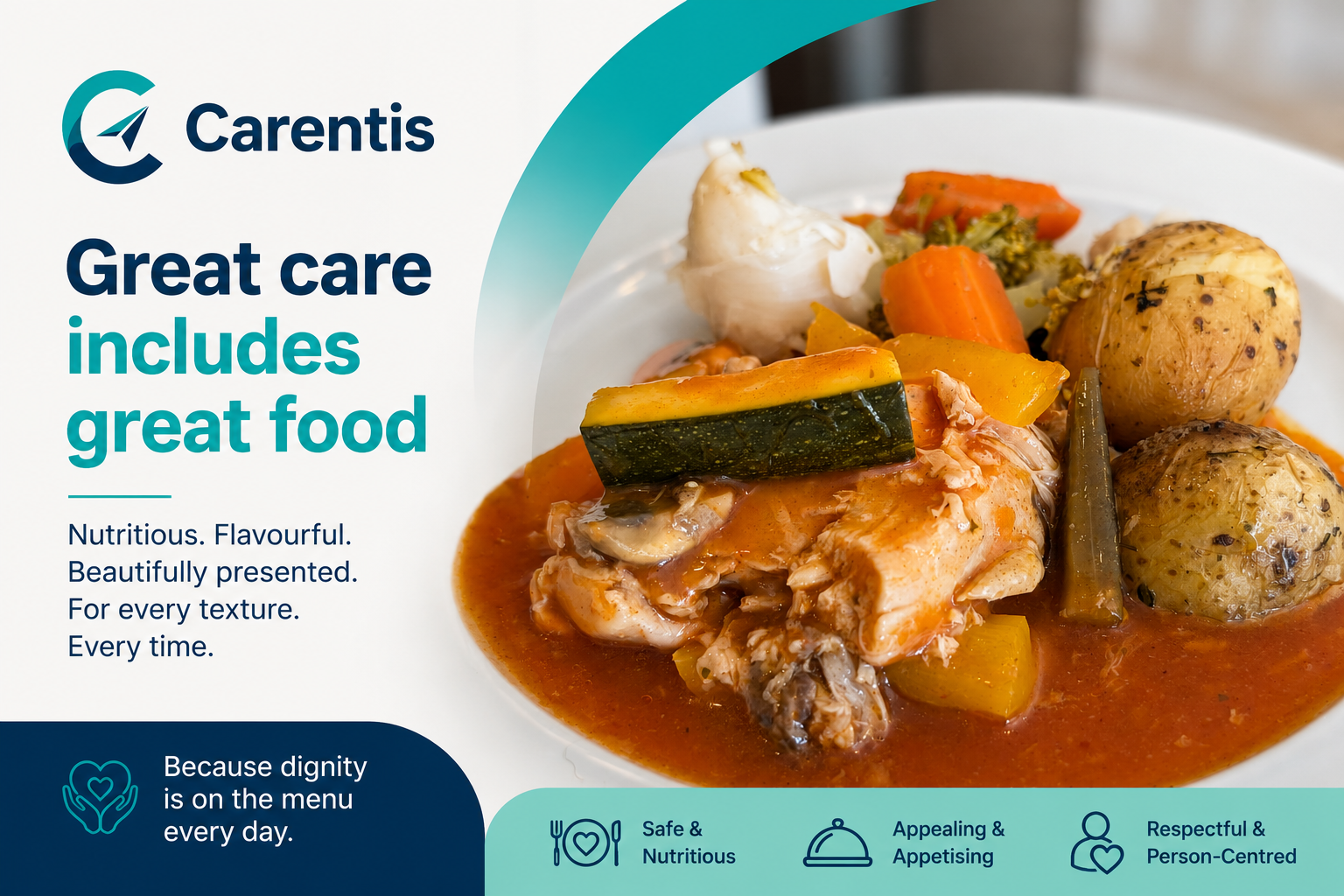
One of the biggest misconceptions in care is that if someone needs a modified texture diet, they must accept food that looks unappetising or tastes bland.
Nothing could be further from good practice.
For many residents, mealtimes are one of the highlights of the day. They provide comfort, routine, social interaction and enjoyment. When food becomes unappealing, people are less likely to eat enough, increasing the risk of malnutrition, dehydration and weight loss.
Texture Modification Doesn’t Mean Taste Modification
Residents who require soft, minced and moist, or pureed diets often have swallowing difficulties (dysphagia). Texture modification is essential for safety—but it should never come at the expense of flavour.
Every dish should still be:
- Well seasoned (where appropriate)
- Made with quality ingredients
- Served at the correct temperature
- Prepared to retain its natural flavours
- Presented attractively
A pureed roast dinner should still taste unmistakably like roast beef, potatoes, carrots and gravy—not simply a beige puree.
Presentation Matters
People eat with their eyes first.
Using moulds to reshape pureed foods, piping mashed vegetables neatly, separating colours on the plate and garnishing appropriately can transform a meal from something clinical into something inviting.
Residents deserve meals they are proud to eat, not meals they feel embarrassed by.
Every Texture Level Deserves the Same Respect
Whether someone enjoys a regular diet or requires an IDDSI Level 4 Pureed diet, they deserve the same quality, care and dignity.
Modified diets should never feel like an afterthought.
Kitchen teams can achieve excellent results through careful menu planning, staff training and collaboration with speech and language therapists and dietitians.
Nutrition Is More Than Calories
Food should nourish both the body and the mind.
Well-presented, flavourful meals can:
- Improve appetite
- Reduce the risk of malnutrition
- Support wound healing
- Improve mood and wellbeing
- Encourage independence where possible
- Create positive social experiences during mealtimes
A Matter of Dignity
Imagine being told that every meal for the rest of your life would be blended into an unrecognisable paste.
Now imagine those meals being colourful, carefully presented and full of flavour.
The difference isn’t just culinary—it’s about dignity, respect and quality of life.
Residents don’t stop appreciating good food because they develop swallowing difficulties.
What Good Care Looks Like
Outstanding care homes recognise that dining is part of person-centred care. They invest in staff training, understand the IDDSI framework, seek feedback from residents and families, and continually improve the dining experience.
Texture modification is about making food safe—not making it boring.
Final Thought
Every resident deserves to look forward to mealtimes.
Regardless of the texture they require, food should be safe, nutritious, visually appealing and, above all, delicious. Because dignity doesn’t end when someone’s diet changes—it becomes even more important.
Call to Action
At Carentis, we believe great care includes great dining. Whether you’re choosing a care home for a loved one or working to improve standards in your service, don’t overlook the importance of mealtimes. Ask how modified diets are prepared, how residents are involved in menu choices, and whether every meal is served with the dignity and care people deserve.
👉 Visit our Free Resources page to explore more guides that could make all the difference.

Care Home Concerns Guidance Call
If you’re worried about the care your loved one is receiving in a care home, this confidential guidance call provides practical, independent advice from an experienced nurse, care home manager and senior care leader. Together, we’ll discuss your concerns, explore your options, and create a clear action plan so you know what to do next