
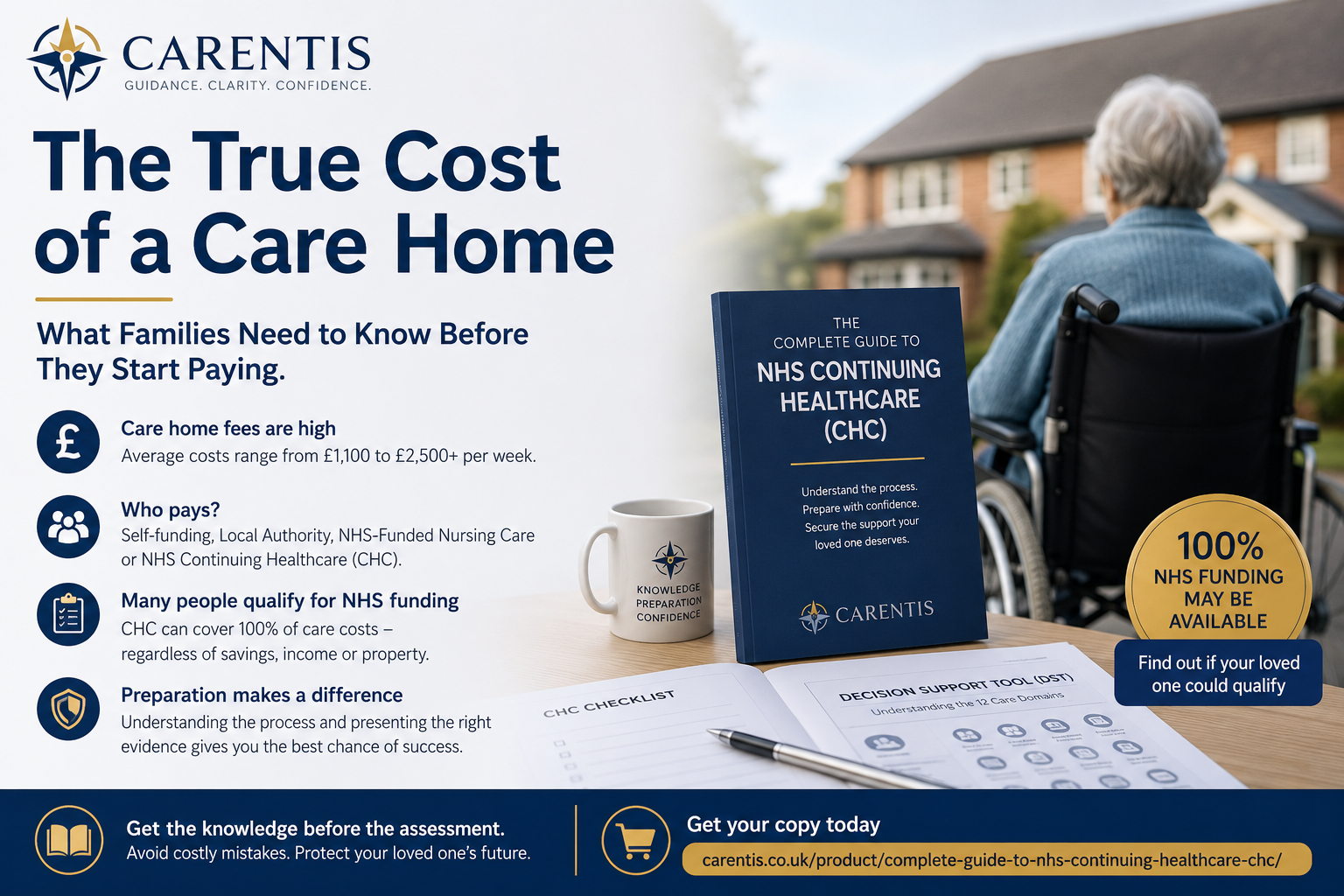
When someone you love needs residential care, one of the first questions is almost always:
“How much is a care home going to cost?”
Unfortunately, there isn’t a simple answer.
Care home fees vary enormously depending on where you live, the level of care required, and whether the person qualifies for any financial support. Many families end up paying tens or even hundreds of thousands of pounds because they don’t fully understand how the funding system works.
Even worse, many people who should receive NHS funding never claim it because they don’t know it exists.
This guide explains everything you need to know about care home costs, what affects the price, who pays, and how to avoid making expensive mistakes.
How Much Does a Care Home Cost?
The average care home fee in England now ranges between:
- Residential care: £1,100–£1,500 per week
- Nursing care: £1,400–£2,000+ per week
- Specialist dementia nursing care: £1,700–£2,500+ per week
That means annual costs can easily exceed:
- £60,000
- £80,000
- £100,000
Many premium homes now charge considerably more.
If someone lives in a care home for five years, the total bill could exceed £400,000.
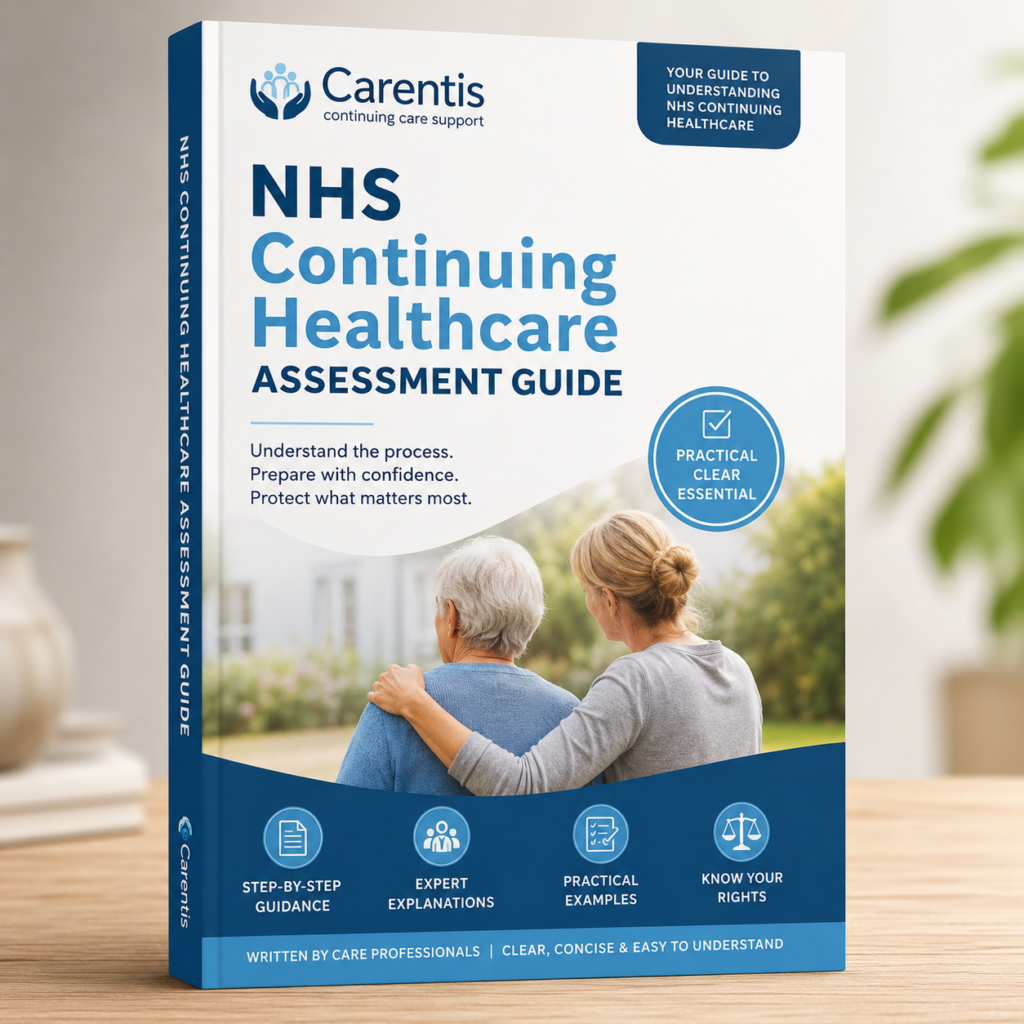
Complete Guide to NHS Continuing HealthCare (CHC)
Prepare for your NHS Continuing Healthcare (CHC) assessment with confidence. This comprehensive guide explains the Checklist, Decision Support Tool (DST), Primary Health Need test, and appeals process in plain English, helping families understand what assessors are looking for and how to present the strongest possible evidence.
Why Are Care Home Fees So High?
Families are often shocked by the figures.
However, running a care home is extremely expensive.
Fees help pay for:
- 24-hour staffing
- Registered nurses
- Care assistants
- Clinical supplies
- Medication management
- Food and catering
- Laundry
- Housekeeping
- Maintenance
- Utilities
- Insurance
- Compliance with CQC regulations
- Activities and wellbeing programmes
Good care is labour intensive.
Residents often need support day and night, meaning staffing is by far the biggest expense.
What Affects the Cost?
Several factors determine what you’ll pay.
Location
London and the South East usually have the highest fees.
Some northern regions may be significantly cheaper.
Type of Care
Residential care costs less than nursing care because registered nurses are not required on every shift.
Nursing homes provide:
- Clinical assessments
- Wound care
- Medication management
- PEG feeding
- Catheter care
- End-of-life care
- Complex health monitoring
Dementia Care
People living with dementia often require:
- Higher staffing ratios
- Secure environments
- Specialist training
- Behavioural support
This increases fees.
Room Type
A large en-suite room with garden views will usually cost more than a standard bedroom.
Care Needs
Someone needing assistance with washing and dressing costs less than someone requiring:
- Two carers
- Hoisting
- Complex nursing
- Challenging behaviour support
Who Pays?
This is where many families become confused.
There are several possible funding routes.
Self-Funding
If someone has savings and assets above the current financial thresholds, they may pay the full cost themselves.
This often includes using:
- Savings
- Investments
- Income
- Pension
- Property (in certain circumstances)
Many people assume they must sell their house immediately.
That isn’t always true.
Local Authority Funding
If assets fall below the relevant threshold, the local authority may contribute towards care costs following a financial assessment.
However, local authority funding rarely covers the full amount charged by many private care homes.
NHS-Funded Nursing Care (FNC)
Residents in nursing homes may qualify for NHS-funded nursing care.
This is a weekly contribution paid directly to the nursing home towards registered nursing care.
Many families mistakenly believe this pays the full bill.
It doesn’t.
NHS Continuing Healthcare (CHC)
This is the funding that many people have never heard of.
Yet it can be worth over £100,000 per year.
If someone has a primary health need, the NHS may pay 100% of their care costs, regardless of:
- Savings
- Property
- Income
- Investments
It can cover:
- Nursing home fees
- Residential care
- Care at home
- Equipment
- Specialist packages
There is no financial means test.
The Biggest Myth
One of the most common statements we hear is:
“Mum owns her house so she won’t qualify.”
This is simply not true.
Property ownership has nothing to do with eligibility for NHS Continuing Healthcare.
CHC is based solely on health needs.
Many people wrongly spend hundreds of thousands of pounds because nobody explained this distinction.
Why So Many Families Miss Out
The assessment process can feel overwhelming.
Families are often:
- unfamiliar with NHS terminology
- attending an assessment for the first time
- emotional
- under pressure
- unsure what evidence matters
Professionals conduct these assessments regularly.
Most families do not.
Without preparation, it’s easy to understate someone’s needs or overlook important evidence.
The Decision Support Tool (DST)
If someone progresses to a full CHC assessment, the NHS uses a document called the Decision Support Tool (DST).
It examines twelve care domains, including:
- Behaviour
- Cognition
- Communication
- Mobility
- Nutrition
- Continence
- Skin integrity
- Breathing
- Drug therapies
- Psychological needs
- Altered states of consciousness
- Other significant care needs
Understanding how these domains are assessed can make a significant difference to how a person’s needs are presented.
Common Mistakes Families Make
Many relatives unintentionally weaken their own case by:
- focusing on diagnoses instead of care needs
- forgetting examples
- accepting inaccurate records
- assuming professionals already know everything
- not reading assessment paperwork beforehand
- misunderstanding the scoring system
- failing to challenge factual errors
- overlooking fluctuating needs
- attending unprepared
Preparation matters.
Can You Appeal?
Yes.
If you believe a decision is wrong, there is an appeals process.
However, successful appeals usually rely on detailed evidence showing why the assessment failed to reflect the person’s actual health needs.
Keeping good records from the beginning makes this much easier.
How to Prepare Before an Assessment
Before attending a Checklist or DST assessment:
- Read the NHS National Framework.
- Gather recent care records.
- Make notes of daily care needs.
- Record examples of risks and interventions.
- Ask for copies of assessment paperwork in advance.
- Don’t rely on memory during the meeting.
- Be ready to explain what happens on a bad day—not just a good day.
Preparation gives you the best opportunity to ensure the assessment reflects the person’s real needs.
Don’t Wait Until You’re in Crisis
Many families only start researching Continuing Healthcare after they’ve already begun paying care home fees.
By then, months—or even years—may have passed.
Understanding the funding system early can help you ask better questions, prepare more effectively for assessments, and avoid costly misunderstandings.
Get the Knowledge Before the Assessment
If you want a practical guide to understanding NHS Continuing Healthcare, the Checklist, and the Decision Support Tool, the Carentis Complete Guide to NHS Continuing Healthcare (CHC) has been written specifically for families.
Inside you’ll find:
- A clear explanation of how CHC funding works
- A step-by-step guide to the Checklist assessment
- Detailed guidance on every DST care domain
- Tips on presenting evidence effectively
- Common mistakes to avoid
- Practical examples based on real-world assessments
- Advice on preparing for MDT meetings and appeals
Whether you’re supporting a parent, spouse, or other relative, the guide is designed to help you approach the process with confidence.
Buy your copy today
👉 https://carentis.co.uk/product/complete-guide-to-nhs-continuing-healthcare-chc/
The cost of the guide is tiny compared with the potential financial impact of understanding the assessment process before you begin.
Free Download: CHC Checklist
Not ready to purchase yet?
Start with our free CHC Checklist & DST Preparation Guide, which explains the first stage of the assessment process and includes a practical checklist you can use before attending an NHS assessment.
Download it from the Carentis website and begin preparing today.
Final Thoughts
Care home fees are among the largest financial commitments many families will ever face. While the cost of care can seem overwhelming, understanding the funding options available—including NHS Continuing Healthcare—can make a significant difference.
The key is not to assume that paying is your only option. Learn how the system works, prepare thoroughly for assessments, and make informed decisions based on evidence rather than assumptions.
At Carentis, our aim is to help families navigate this complex process with clear, practical guidance—so you can focus on what matters most: ensuring your loved one receives the right care and support.