

Caring for someone you love can be rewarding, but it can also be exhausting.
You may be managing medication, appointments, meals, personal care, shopping, household tasks and countless small decisions every day. Sometimes you simply need a break.
That is where respite care can help.
Respite care is temporary care arranged so that the person you normally look after continues to receive the support they need while you take time away from your caring role.
That break might be a few hours while someone comes into the person’s home. It might be regular day care. Or it could be a short stay in a residential or nursing care home while you take a holiday.
Respite care is not about abandoning someone.
It is about making caring sustainable.
This guide explains what respite care is, the different options available, how to arrange it, how funding can work, what to look for in a care home and what you should ask before agreeing to a short stay.
What is respite care?
Respite care is temporary care provided to give an unpaid family carer a break from their usual caring responsibilities.
The term covers a wide range of services.
Depending on the person’s needs, respite could involve:
- Someone sitting with them at home for a few hours
- A paid carer providing care at home
- Attendance at a day centre
- A short period of live-in care
- A temporary stay in a residential care home
- A temporary stay in a nursing home
- Short-term support following illness or hospital discharge
- In some circumstances, hospice-based respite care
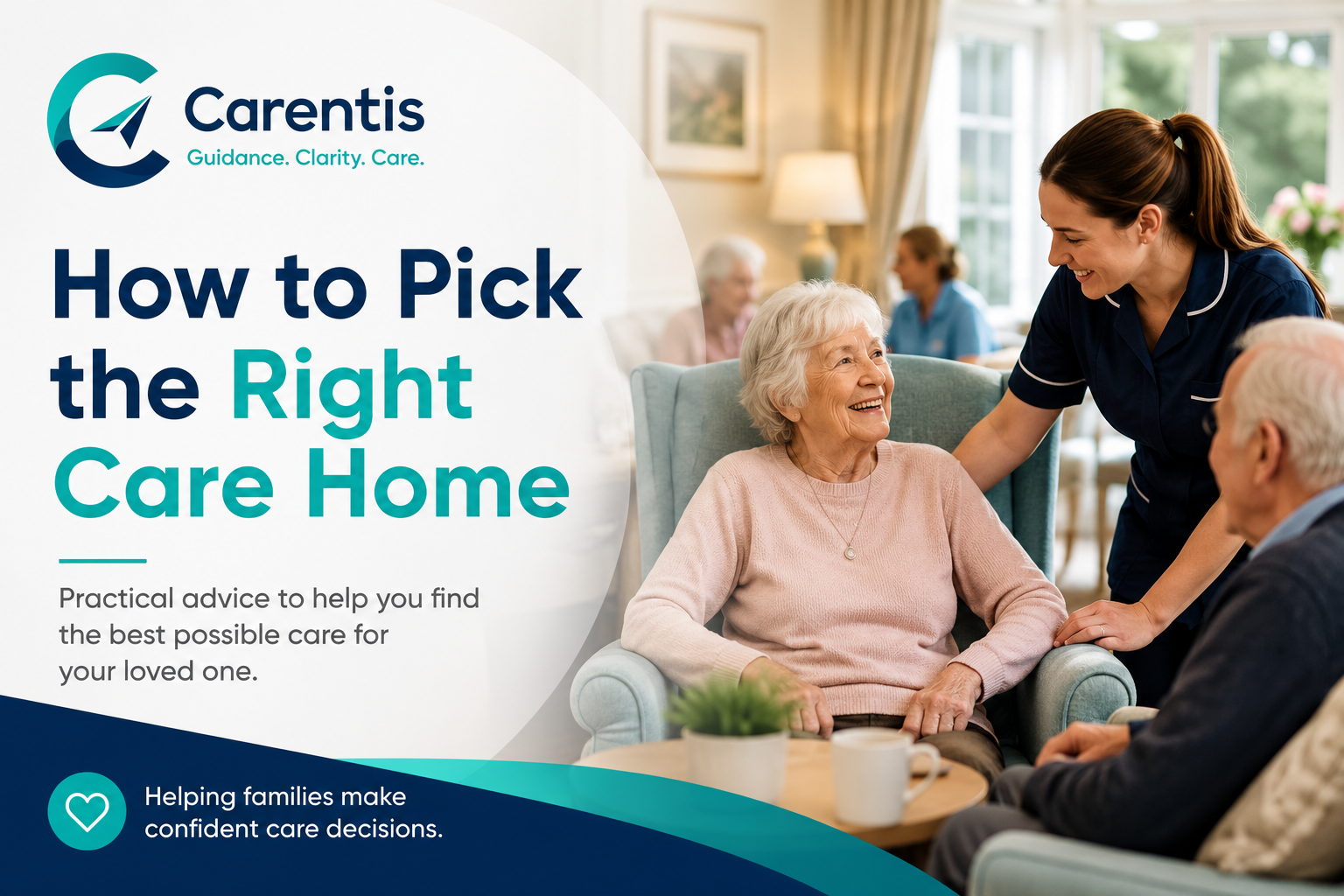
The NHS describes respite care as ranging from a volunteer sitting with someone for a few hours through to a short stay in a care home while their usual carer takes a holiday.
There is therefore no single model of respite care.
The right arrangement depends on the needs of the person being cared for, the needs of the family carer and the length and purpose of the break.
Why does respite care matter?
Family carers often become so focused on the needs of the person they support that they overlook their own.
That can gradually lead to exhaustion.
You might find yourself becoming increasingly tired, irritable or anxious. You may stop seeing friends, postpone appointments or struggle to take time away from the house.
Sometimes the warning signs are obvious.
Sometimes they are not.
A break can give you an opportunity to sleep properly, spend time with your family, go on holiday, attend appointments, return to work or simply have some time where you are not responsible for somebody else’s care.
Taking a break does not mean you do not care.
In many cases, taking a break can help you continue caring for someone for longer.
Does the person receiving care benefit from respite?
Respite is often described as something that benefits the carer.
But a good respite arrangement should benefit the person receiving care too.
A short stay in a care home, for example, can provide:
- A change of environment
- Opportunities to meet other people
- Activities and social interaction
- Regular meals and routines
- Professional care and support
- A chance for family members to rest and return feeling refreshed
For someone recovering from illness or hospitalisation, temporary care may also provide additional support while they regain their strength.
For someone living with dementia, a well-planned short stay can provide a change of scenery while maintaining familiar routines and preferences.
The important thing is that respite should be planned around the person’s needs rather than simply treating the person as someone who needs to be “looked after” while the carer goes away.
What types of respite care are available?
There are several different options.
1. Sitting services
A volunteer or paid carer may stay with the person at home for a few hours.
This can allow you to:
- Go shopping
- Attend an appointment
- Meet a friend
- Exercise
- Spend time with other family members
- Simply have some time to yourself
This can be particularly useful when a full residential stay would be unnecessary.
2. Home care
A home-care worker can visit the person in their own home and provide agreed support.
Depending on the service, this could include:
- Personal care
- Preparing meals
- Medication support
- Assistance with mobility
- Companionship
- Support with everyday activities
Regular visits can provide you with predictable periods away from your caring role.
3. Day care
The person you care for may attend a day centre or another organised service for part of the day.
This can provide both social interaction for them and a regular break for you.
4. Live-in care
In some circumstances, a paid carer can stay in the person’s home for a period of time.
This may be appropriate where the person’s needs are too significant for occasional visits but they remain able to stay safely in their own home.
5. Residential respite care
A residential care home can provide a temporary room and 24-hour care.
This is one of the most useful options when a carer wants to take a longer break, such as a holiday.
The person may stay for several days, a couple of weeks or longer, depending on their needs and the arrangements made with the provider.
6. Nursing respite care
If someone has nursing needs, a nursing home may be more appropriate than a residential home.
This might apply where the person requires registered nursing input in addition to personal care and support.
Not every care home can meet nursing needs, so it is important to establish exactly what support is required before booking a stay.
7. Hospice respite care
Some hospices provide respite for people with palliative or end-of-life care needs.
Hospice services vary, so families should speak directly to their local hospice about whether respite is available and what referral arrangements apply.
Respite care for someone with dementia
Dementia does not automatically mean that residential respite is unsuitable.

In fact, respite can sometimes be extremely valuable for families supporting someone with dementia.
However, choosing the right service matters.
Before arranging a stay, consider:
- Does the home have experience caring for people with dementia?
- How does the home manage distress or agitation?
- How are personal routines recorded?
- Can familiar belongings be brought from home?
- How are meals and dietary preferences managed?
- How does the home support people who walk or wander?
- What happens if the person’s behaviour changes?
- How will the family be involved?
- What happens if the person becomes unwell?
A detailed handover can make a significant difference.
Tell the care home about the person’s usual routine, communication style, likes and dislikes, mobility, continence, medication, sleep pattern and anything that may cause distress.
You know the person better than anyone.
That information is valuable to the care team.
How much does respite care cost?
There is no single UK-wide price for respite care.
The cost depends on:
- The type of care
- The person’s care needs
- Whether nursing care is required
- The location
- The care provider
- The length of the stay
- Whether the stay is privately funded or arranged through public services
- Any additional services or charges
A residential respite stay may be charged on a daily or weekly basis.
Some homes have minimum-stay requirements, while others may accept shorter stays if they have availability.
Always ask for the full cost before agreeing to a booking.
Do not assume that the advertised room rate includes everything.
Ask whether there are additional charges for things such as:
- Chiropody
- Hairdressing
- Transport
- Special equipment
- Certain therapies
- Personal items
- Additional care requirements
Can the council pay for respite care?
Potentially, yes.
However, there is no automatic entitlement to council-funded respite simply because someone is a carer.
In England, the NHS advises that councils will generally assess both the needs of the person receiving care and the needs of the carer before deciding whether respite should be funded.
The person being cared for may have a needs assessment, while the unpaid carer can request a carer’s assessment.
If eligible, the resulting care and support arrangements may include respite.
A financial assessment may then determine whether the council contributes towards the cost and whether the person has to contribute themselves.
The rules and terminology differ across England, Wales, Scotland and Northern Ireland.
Do not assume that information about funding in one part of the UK applies elsewhere.
What about direct payments?
Direct payments can provide greater choice over how assessed care and support needs are met.
In England, eligible people and carers may be able to receive direct payments following an assessment.
These can allow the person to arrange and purchase agreed support themselves rather than having the council arrange every service.
In Scotland, Self-directed Support can provide different ways of arranging support, including direct payments.
Wales and Northern Ireland have their own systems and terminology.
If funding is important to you, ask the relevant local authority or health and social care body specifically whether a respite or short-break arrangement can be included within the person’s assessed support.
Could NHS Continuing Healthcare help?
For some people, the NHS rather than social services may be responsible for funding care.
NHS Continuing Healthcare (CHC) is a package of care for adults with a primary health need which is arranged and funded solely by the NHS.
Eligibility is based on assessed needs rather than simply a diagnosis.
If the person you care for has complex, intense or unpredictable health needs, it may be appropriate to ask whether they should be considered for NHS Continuing Healthcare.
This is particularly important if you are already paying for substantial care privately.
NHS-funded nursing care may also be relevant where someone is not eligible for Continuing Healthcare but requires nursing care in a registered nursing home.
Funding arrangements are complex, so families should seek specific advice about the person’s circumstances rather than assuming that respite will or will not be covered.
Respite care across the UK
The broad principle is the same across the UK, but the systems are not identical.
England
Local authorities can assess the needs of the person receiving care and the carer. Care and support plans can include respite options.
Wales
Carers have rights to assessment and support under the Welsh social care system. Local authorities can provide or arrange support that gives carers a meaningful break.
Scotland
Short breaks are part of the support available to unpaid carers. Options can include residential care, care at home and other forms of replacement care. Scotland also operates Self-directed Support.
Northern Ireland
Health and Social Care Trusts assess carers and the people they care for. Temporary residential or nursing-home stays may be available as respite, subject to assessment and funding arrangements.
Because the systems differ, always check the arrangements that apply where you live.
How do I arrange respite care?
Start by deciding what sort of break you actually need.
Do you need:
A few hours?
A sitting service or home-care visit may be sufficient.
A regular day off?
Day care or scheduled home care might work.
A weekend?
A short residential stay could be appropriate.
A two-week holiday?
You may need a residential or nursing respite placement.
Emergency cover?
Contact your local authority, health and social care service, carer’s organisation or existing care provider as soon as possible.
If you are considering a care-home stay, start planning early.
Short-stay rooms can be limited, particularly during busy periods such as school holidays and Christmas.
How do I choose a care home for respite?
Do not choose a home simply because it has a room available.
Ask questions.
Check the home’s registration
Make sure the home is registered to provide the type of care the person needs.
In England, check the home’s current CQC information.
The equivalent regulator differs elsewhere in the UK.
Visit before booking if possible
Look beyond the décor.
Notice:
- How staff speak to residents
- Whether residents appear comfortable
- Whether staff know people’s names
- Whether the environment feels calm
- Whether residents are sitting alone or engaged
- Whether the home smells clean
- Whether staff seem rushed
- Whether the atmosphere feels welcoming
Your instinct matters, but combine it with objective questions.
Ask about staffing
Ask:
- How many staff are normally on duty?
- Who will provide care overnight?
- What happens if staffing levels change?
- Does the home use agency staff?
- How are new residents introduced to the team?
Ask about the person’s specific needs
Be very clear about:
- Mobility
- Falls
- Medication
- Continence
- Nutrition
- Communication
- Dementia
- Behaviour
- Personal care
- Night-time needs
- Equipment
- Allergies
Do not assume that because a home offers respite it can automatically meet every need.
What should I take into a respite care home?
A short stay works better when the person has the information and belongings they need.
Depending on the individual, this might include:
- Comfortable clothing
- Toiletries
- Medication information
- Mobility aids
- Glasses
- Hearing aids
- Dentures
- Favourite toiletries
- Photographs
- Familiar items from home
- A preferred pillow or blanket
- A written daily routine
- Emergency contact details
Label belongings where possible.
More importantly, provide information about the person.
A care plan should tell the care team what the person needs.
But a family handover can explain who that person actually is.
What should I tell the care home?
Think beyond medical information.
Tell them:
What makes them happy?
What worries them?
What do they like to eat?
What do they dislike?
What time do they normally get up?
How do they like their tea?
What television programmes do they watch?
What music do they enjoy?
How do they communicate when something is wrong?
What usually settles them when they become distressed?
These details can make a temporary stay feel much more familiar.
What if the person does not want respite care?
This can be one of the hardest parts.
Someone may say:
“I’m not going into a care home.”
That does not necessarily mean the idea is impossible.
Try to understand why they are refusing.
Are they frightened?
Do they think you are abandoning them?
Have they had a bad experience before?
Do they not understand what respite actually means?
Would a visit help?
Could you describe it as a short stay rather than a permanent move?
However, if the person lacks capacity to make the relevant decision, different legal considerations apply.
Capacity is decision-specific and should not simply be assumed because someone has dementia or another cognitive impairment.
If there are concerns about consent, capacity or restrictions on someone’s liberty, seek appropriate professional advice.
What happens if respite becomes permanent?
Sometimes a short stay reveals that the person needs more support than the family can safely provide at home.
That can be emotionally difficult.
A respite stay should not automatically become permanent simply because the person is already in the home.
If the family begins to consider permanent care, treat it as a new decision.
Look at:
- The person’s wishes
- Their care needs
- Their capacity and consent
- Funding
- The suitability of the home
- The family’s ability to continue supporting them
- Any relevant legal arrangements
A short stay can sometimes provide valuable information about what level of care is actually needed.
What if something goes wrong during respite?
Ask the care home before the stay:
- Who will contact me if there is a problem?
- What happens if they fall?
- What happens if they become unwell?
- Who contacts the GP?
- When would you call an ambulance?
- What happens if their needs increase?
- Can the stay be extended?
- What happens if the person cannot safely return home?
Knowing the answers before the stay can make it much easier to relax while you are away.
Respite care is not a sign of failure
Perhaps the most important thing to remember is this:
Needing a break does not mean you have failed.
Caring for another person can be physically and emotionally demanding.
You are allowed to have a life outside caring.
You are allowed to sleep.
You are allowed to see friends.
You are allowed to go on holiday.
And you are allowed to ask someone else to take responsibility for your loved one’s care for a while.
Good respite care should allow you to step away knowing that the person you care for is safe, supported and treated as an individual.
The aim is not simply to give you time away.
The aim is to help make the caring relationship sustainable.
Respite care checklist
Before arranging a respite stay, ask:
- What level of care does my relative need?
- Do they need residential or nursing care?
- Could care at home provide enough cover?
- Has a needs assessment been completed?
- Have I had a carer’s assessment?
- Could public funding be available?
- Could NHS Continuing Healthcare be relevant?
- Have I visited the care home?
- Is the home registered for the person’s needs?
- What is included in the price?
- Are there additional charges?
- Is there a minimum stay?
- What happens if the person becomes unwell?
- What happens if they fall?
- Who will contact the family?
- Can the stay be extended?
- What information does the home need?
- What belongings should we bring?
- What does the person need to feel comfortable?
- What happens at the end of the stay?
Frequently asked questions
What is respite care?
Respite care is temporary care that allows an unpaid family carer to take a break while the person they normally care for continues to receive support.
How long does respite care last?
There is no single fixed length. Respite can involve a few hours of support, regular day care or a temporary residential or nursing-home stay lasting several days, weeks or potentially longer. The provider’s availability and terms will affect what is possible.
Is respite care only for elderly people?
No. Respite can be appropriate for people of different ages who require care because of disability, illness, dementia, mental health needs or other circumstances.
Can I get respite care for someone with dementia?
Yes. Many services provide respite for people living with dementia. It is important to choose a provider with the appropriate experience and to provide detailed information about the person’s routines, preferences and needs.
Does the council pay for respite care?
It can, depending on the person’s assessed needs, eligibility and financial circumstances. The rules differ across the UK.
Can I arrange respite care privately?
Yes. Families can approach care homes, home-care providers and other services directly. Private arrangements are subject to availability and the provider’s assessment of the person’s needs.
Can NHS Continuing Healthcare pay for respite care?
NHS Continuing Healthcare can fund eligible care for adults with a primary health need. Whether a particular respite arrangement can be funded depends on the person’s assessed needs and the agreed care package.
Do I need a carer’s assessment?
If you are struggling in your caring role, requesting a carer’s assessment is an important step. It can identify the impact caring has on you and what support may help you continue.
What if my relative refuses respite?
Try to understand why they are refusing and involve them in planning wherever possible. If there are questions about mental capacity or consent, these should be addressed separately rather than assuming that a diagnosis automatically means someone cannot make decisions.
Is respite care the same as moving into a care home?
No. Respite care is temporary. A person may stay in a care home for a short period and then return home.
Can respite care become permanent?
It can happen that a short stay leads a family to consider permanent care, particularly if the person’s needs have increased. However, permanent care should be considered as a separate decision involving the person’s needs, wishes, capacity, funding and the suitability of the home.
Where to go next
If you are considering respite care, you do not have to work everything out at once.
Start by identifying the break you need and the level of care the person requires.
Then look at the options available locally.
If you are unsure about funding, ask for an assessment.
If you are considering a care-home stay, visit several homes if possible and ask questions before making a decision.
And remember: asking for help is not giving up.
It is one of the things that can help you keep caring well.